Check Keyword Density Online Before You Publish
Check keyword density online with a practical SEO workflow: spot overuse, compare intent, fix headings, and connect the page to better internal links.
Put this guide into action
Use the free Keyword Density Checker while you read. No account required, and your inputs stay private.
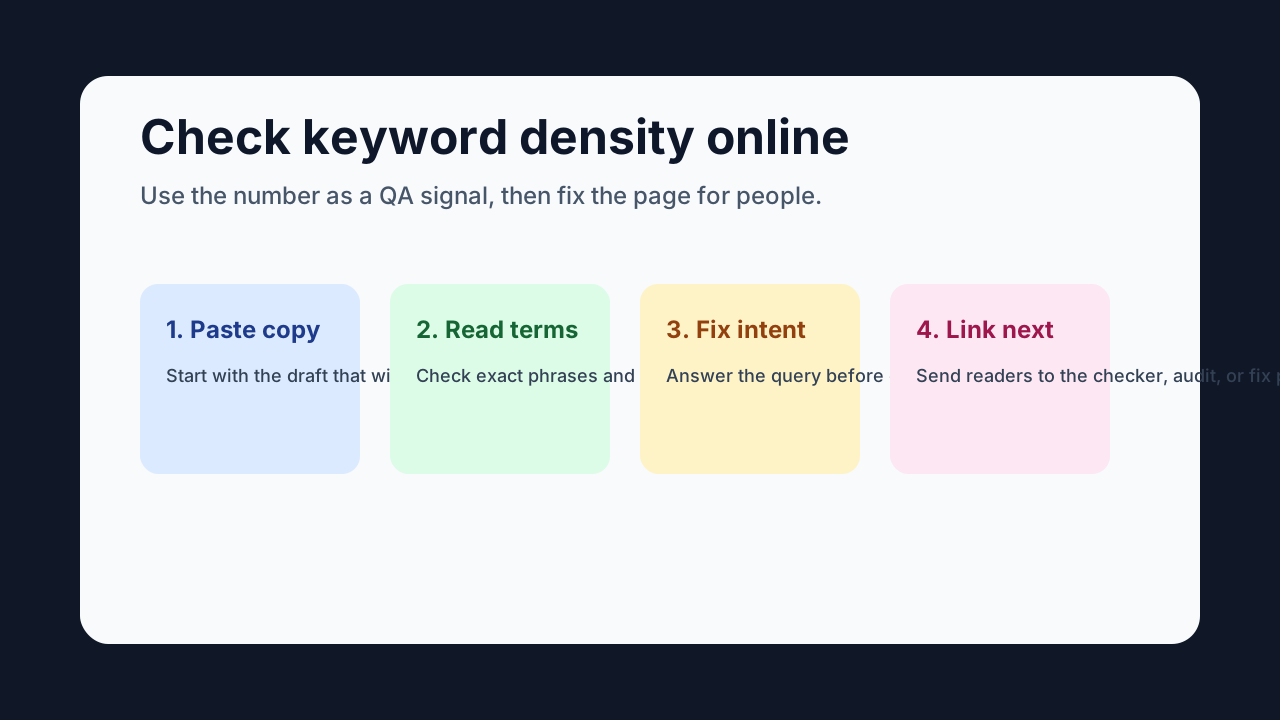
Searchers who want to check keyword density online usually have one real problem: they are about to publish a page and do not know whether the copy sounds focused, thin, or stuffed. A density number helps, but it only becomes useful when it is connected to search intent, headings, internal links, and the actual answer on the page.
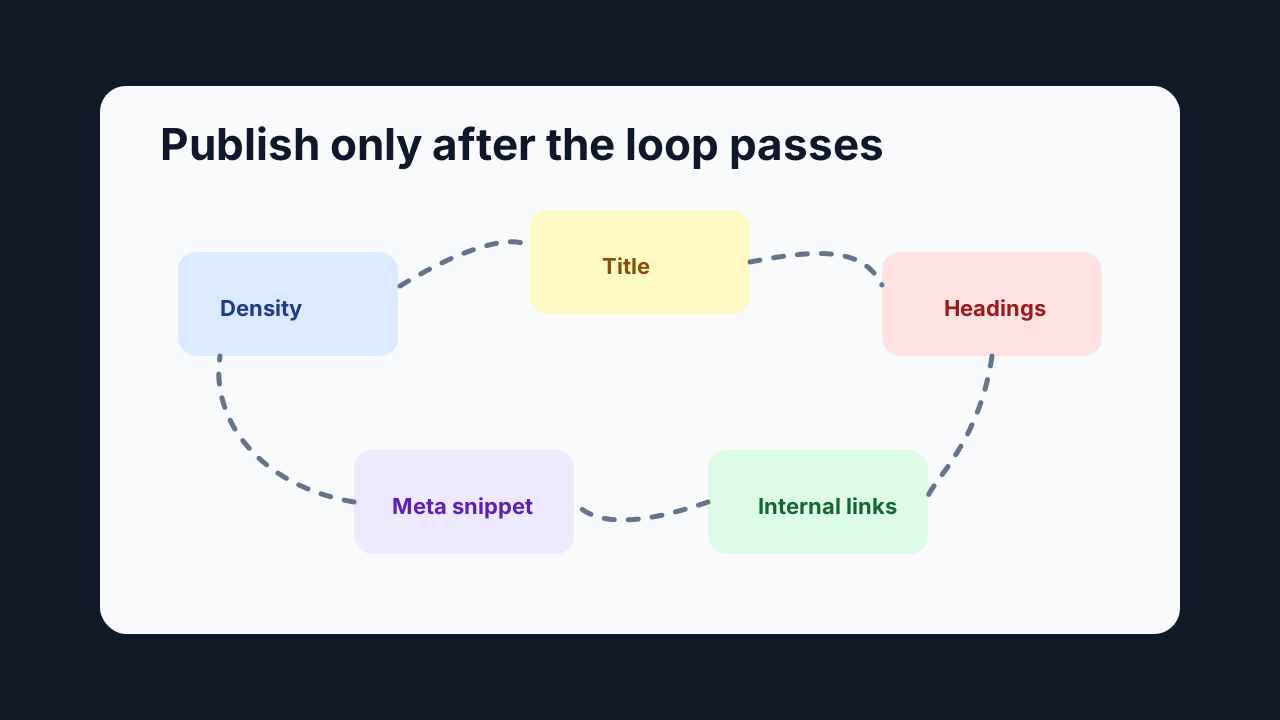
Use the free Keyword Density Checker as the first pass, then run the On-Page SEO Checker, Heading Hierarchy Checker, and SEO Title Checker before you publish.
Quick answer
To check keyword density online, paste the page copy into a keyword density checker, review the top one-word, two-word, and three-word phrases, then decide whether the primary topic is clear without repeating the same phrase unnaturally. The goal is not to hit a magic percentage. The goal is to make the page obvious to readers and search engines.
Fresh DataForSEO research found both keyword density checker and check keyword density at 1,000 monthly searches, with lower difficulty than broader SEO checker terms. GSC also shows FreelTools already gets impressions around SEO checker and keyword-density intent, so this guide supports an existing tool path instead of creating another generic SEO article.
What to inspect first
| Check | What good looks like | What to fix |
|---|---|---|
| Primary phrase | The target phrase appears in the title, intro, one H2, and a useful answer | Repeating the exact phrase in every paragraph |
| Close variants | Related phrases explain the same job in natural language | Only using one exact-match phrase |
| Headings | H2s describe user questions and next steps | Headings made only for keyword repetition |
| Internal links | Links point to the next useful tool or checklist | Links use vague anchors like "click here" |
| Search intent | The page answers the task behind the query | The page only defines a term |
The safest workflow
- Pick one target keyword for the page.
- Paste the draft into the Keyword Density Checker.
- Check whether the primary topic appears naturally in the visible copy.
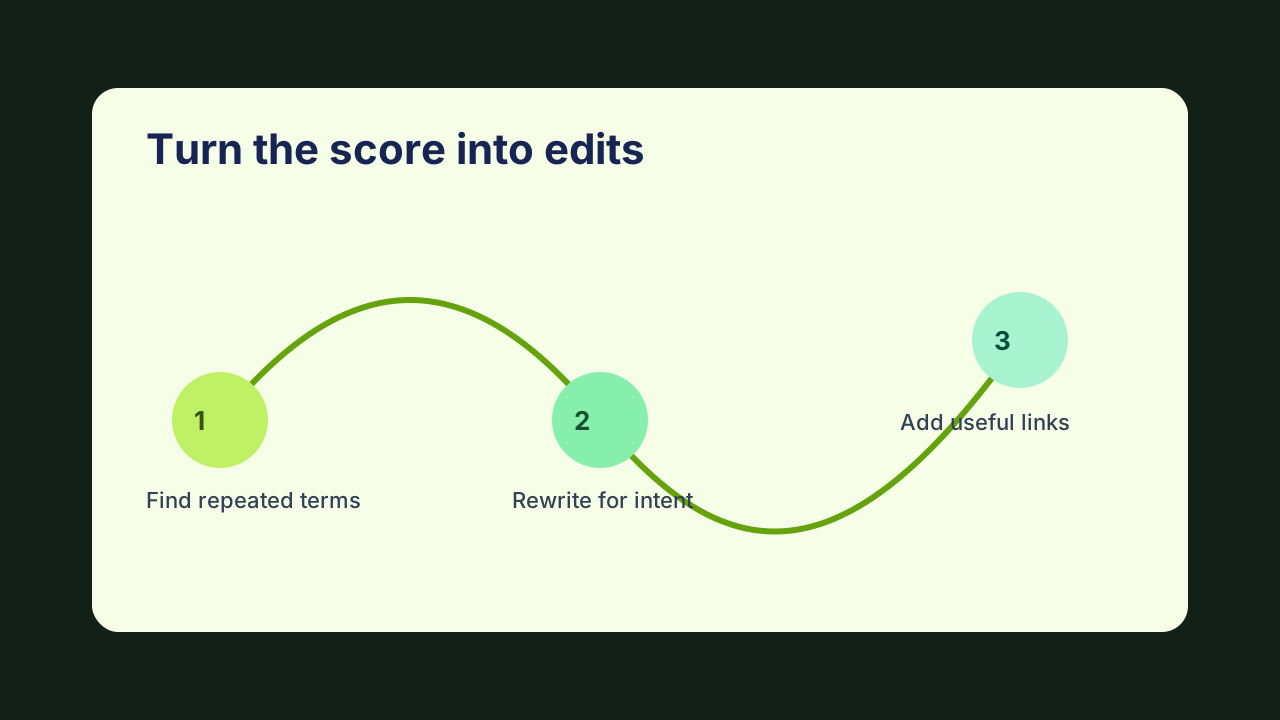
- Replace repeated exact-match phrases with helpful variants.
- Run the Heading Hierarchy Checker to confirm the outline is scannable.
- Use the SEO Title Checker to keep the title click-friendly.
- Add internal links to the next tool, article, service page, or conversion path.
The checker should be a quality control step, not a writing formula. A page can have a tidy density percentage and still fail if the answer is weak, the title is dull, or the next step is missing.
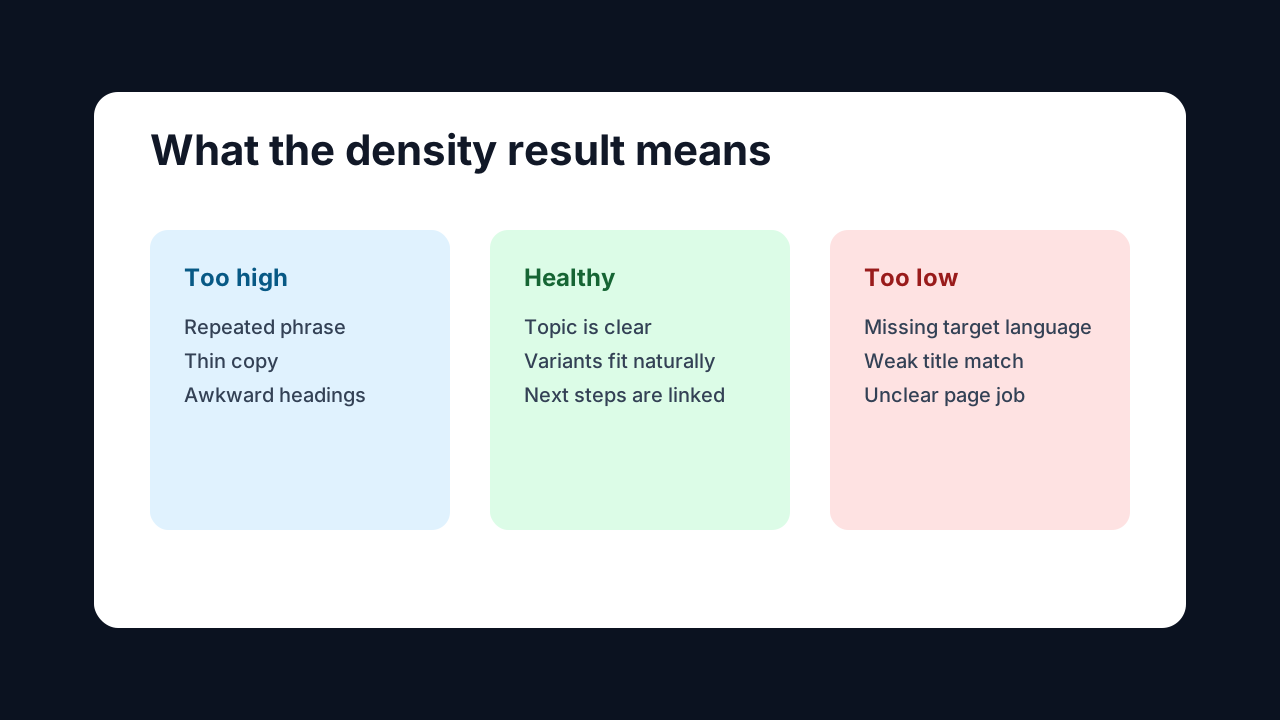
When the density is too high
High density usually means one of three things: the page is too short, the writer repeated a label instead of explaining the idea, or the outline is missing related subtopics. Fix it by expanding the answer, adding examples, using synonyms where they help, and linking to related pages.
For example, a page targeting keyword density checker can also talk about page copy, on-page SEO, topic clarity, heading structure, word count, internal links, and search intent. Those terms make the page more useful without hiding the primary keyword.
When the density is too low
Low density is not automatically bad. It becomes a problem when the page never clearly names the topic a searcher used. If the primary phrase is missing from the title, intro, headings, or answer section, search engines and readers may not understand which query the page is meant to satisfy.
The fix is simple: add the phrase where it improves clarity. Do not force it into every sentence.
Best next tools
- Keyword Density Checker for the phrase count and top-term check.
- On-Page SEO Checker for title, description, headings, and links.
- Heading Hierarchy Checker for H1 to H3 structure.
- Meta Description Checker for snippet cleanup.
- Search Console Query Page Mapping Guide when you need to connect GSC impressions to the right page.
FAQ
What is a good keyword density percentage?
There is no universal target percentage. Use density to spot obvious overuse or missing topic language, then judge the page by search intent, clarity, and usefulness.
Can I use a keyword density checker for SEO?
Yes, but use it as one part of an SEO workflow. It helps find repetition and missing topic focus, while other checks handle title quality, headings, internal links, indexability, and page usefulness.
Should I remove keywords if the density is high?
Remove or rewrite repeated phrases that make the copy sound unnatural. Keep the wording that helps the reader understand the page.
Is keyword density still important?
Keyword density is not a ranking formula, but topic clarity still matters. The phrase check is useful because it reveals whether the draft is focused, over-repeated, or missing the language searchers use.
Free tools for freelancers
Put this advice into action with our free calculators and generators — no login required.